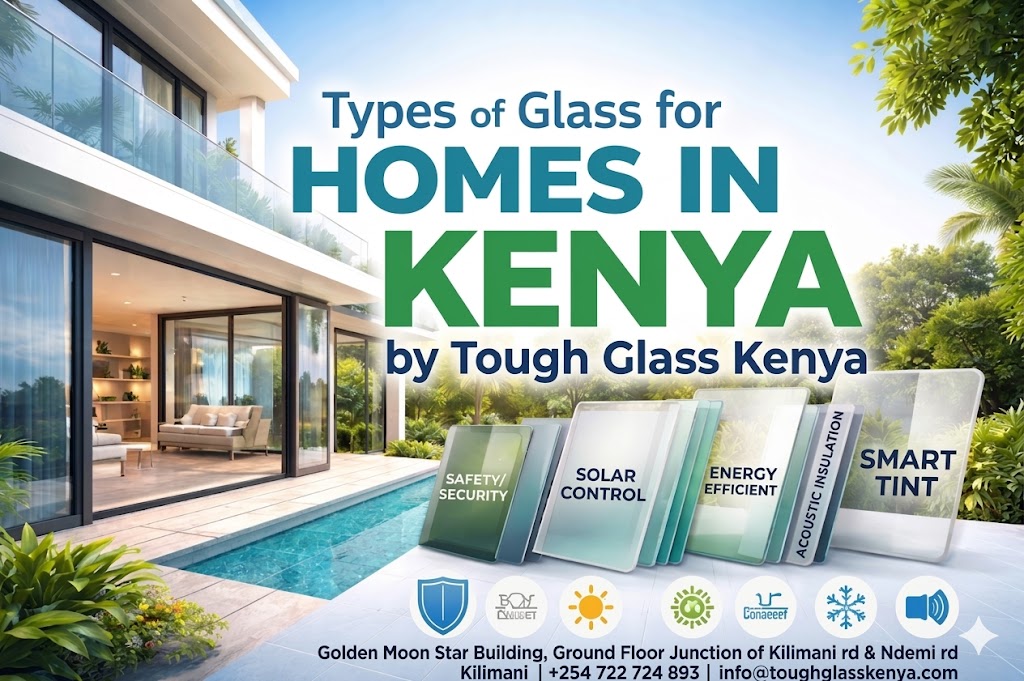
If you walk through any modern estate in Nairobi, whether it’s Kilimani apartments, Syokimau townhouses, or standalone homes in Ruiru, you’ll notice one thing: glass for homes in Nairobi Kenya is no longer just a basic building material. It has become a defining feature of how homes look, feel, and perform.
But here’s the challenge most homeowners face: types of glass for residential buildings are not all the same.
Choosing the wrong type can lead to overheating rooms, safety risks, poor sound insulation, or even higher energy bills. On the other hand, choosing the right combination can transform your home into a secure, energy-efficient, modern living space.
This guide breaks down everything you need to know—deeply, practically, and in a way that actually reflects real-life building and living conditions in Kenya.
Why Glass Choice for Homes in Kenya Matters More Than You Think

In many Kenyan homes, residential glass solutions Kenya are often decided late in construction—sometimes rushed, sometimes based purely on cost. That’s a mistake.
Glass for homes in Nairobi Kenya directly affects:
- Indoor temperature regulation (critical in Nairobi’s fluctuating climate)
- Security and safety (especially in urban areas)
- Noise control (think proximity to roads, churches, or construction)
- Natural lighting (reducing reliance on electricity)
- Aesthetic appeal and property value
A well-thought-out residential glass solution can quietly improve your daily living experience in ways most people only realize after it’s too late.
The Main Types of Glass for Residential Buildings
Let’s break down the most important types—what they are, and where they truly make sense in a Kenyan home.
1. Float Glass (Standard Glass)
This is the most basic form of glass and the starting point for many other types.
Where it fits in real life:
- Internal window panes in low-risk areas
- Picture frames and decorative applications
Reality check:
Float glass is cheap—but it breaks into sharp, dangerous shards. In a busy household (especially with children), it’s rarely the best long-term choice.
2. Tempered Glass (Toughened Glass for Homes in Nairobi)
This is one of the most widely used glass types in modern Kenyan homes—and for good reason.
What makes it valuable:
- Up to five times stronger than standard glass
- Breaks into small, blunt fragments instead of sharp shards
- Resistant to heat and pressure changes
Where it shines:
- Sliding doors opening to balconies or gardens
- Glass shower cubicles Nairobi Kenya
- Glass doors and partitions Kenya
Local insight:
In Nairobi’s growing apartment culture, tempered glass has become almost standard for balconies and large windows due to its safety profile.
3. Laminated Glass (Security Glass for Homes in Kenya)
If security is a concern—and in many parts of Kenya, it is—this is a serious contender.
How it works:
Two or more layers of glass are bonded with a plastic interlayer. Even when broken, the glass sticks together.
Why homeowners choose it:
- Difficult to break through (adds security glass for homes Kenya)
- Reduces noise significantly
- Blocks harmful UV rays
Best applications:
- Ground floor windows
- Skylights
- Homes near busy roads
Real-world scenario:
If you live near a highway like Thika Road or Ngong Road, laminated glass Nairobi Kenya can noticeably reduce traffic noise.
4. Frosted Glass (Obscured Glass for Residential Buildings)
Privacy without sacrificing natural light.
Where it works best:
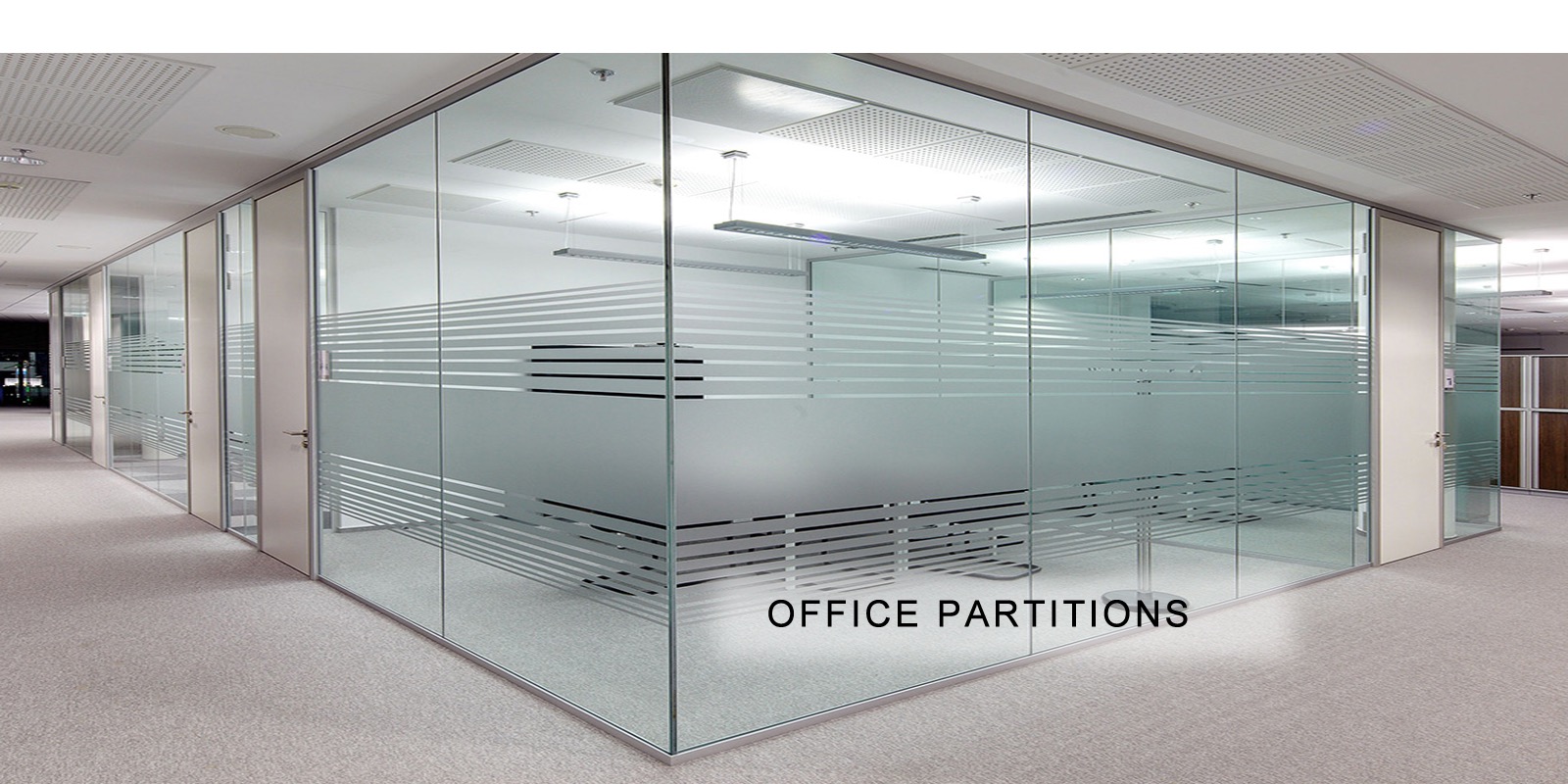
- Bathroom windows
- Shower enclosures Nairobi
- Home office partitions
Why it matters:
In estates where houses are close together, frosted glass Nairobi Kenya prevents direct visibility while still allowing daylight in.
5. Tinted Glass (Tinted Window Glass Kenya)
Tinted glass is especially relevant in Kenya due to sunlight intensity.
What it does:
- Reduces glare
- Minimizes heat penetration
- Enhances daytime privacy
Common uses:
- Exterior windows facing direct sunlight
- Living rooms with large window areas
Local advantage:
In areas like Kitengela or Athi River, tinted glass for homes Kenya helps maintain a cooler indoor environment.
6. Reflective Glass (Modern Glass Design for Homes Kenya)
This is often confused with tinted glass but serves a slightly different purpose.
Key benefits:
- Reflects heat away from the building
- Offers strong daytime privacy
- Gives a sleek, modern exterior look
Best suited for:
- Contemporary homes
- Large glass facades
7. Double Glazed Glass (Insulated Glass Units for Homes Kenya)
This is where performance meets comfort.
Structure:
Two glass panes separated by air or gas.
Why it stands out:
- Excellent insulation (keeps heat out and cool air in)
- Significant noise reduction
- Energy-efficient glass Nairobi Kenya
Ideal for:
- Bedrooms
- Homes near airports or highways
- High-end residential projects
8. Low-E Glass (Energy-Efficient Glass for Homes Nairobi)
This is advanced glass designed for energy efficiency.
What it does:
- Reflects heat while allowing light
- Keeps interiors cooler during hot days
- Reduces energy consumption
Best use cases:
- Large windows
- Modern energy-conscious homes
9. Patterned Glass (Decorative Glass for Homes Kenya)
This is where functionality meets design.
Uses:
- Entry doors
- Interior partitions
- Decorative panels
Why homeowners love it:
It adds character without compromising privacy.
10. Wired Glass
Less common in homes, but still useful in specific cases.
Key feature:
- Embedded wire mesh improves fire resistance
Best used in:
- Utility areas
- Garages
11. Smart Glass (Switchable Glass for Homes Kenya)
A premium, futuristic option.
What makes it unique:
- Changes from clear to opaque at the push of a button
Where it fits:
- High-end bathrooms
- Executive homes
- Modern office spaces within homes
Comparison Table: Choosing the Right Glass for Homes in Nairobi Kenya
| Glass Type | Strength | Safety Level | Privacy | Heat Control | Noise Reduction | Best Use Case |
|---|---|---|---|---|---|---|
| Float Glass | Low | Low | Low | Low | Low | Basic windows |
| Tempered Glass | High | High | Medium | Medium | Medium | Doors, showers |
| Laminated Glass | High | Very High | Medium | Medium | High | Security windows |
| Frosted Glass | Medium | Medium | High | Low | Low | Bathrooms |
| Tinted Glass | Medium | Medium | Medium | High | Medium | Sun-facing windows |
| Reflective Glass | Medium | Medium | High | High | Medium | Exterior facades |
| Double Glazed | High | High | Medium | Very High | Very High | Bedrooms |
| Low-E Glass | High | High | Medium | Very High | High | Energy-efficient homes |
How to Choose the Right Glass for Your Home in Kenya

Instead of asking, “Which glass is best?”, the smarter question is:
“Which glass is best for each part of my home?”
1. For Security
Use laminated glass Nairobi Kenya for:
- Ground floor windows
- Easily accessible entry points
2. For Bathrooms
Use:
- Frosted glass Nairobi Kenya for privacy
- Tempered glass for shower cubicles Nairobi
3. For Living Rooms
Combine:
- Tinted or reflective glass Nairobi to reduce heat
- Large panels to maximize natural light
4. For Bedrooms
Use:
- Double glazed glass Nairobi Kenya for noise reduction
5. For Balconies and Railings
Always go for:
- Tempered or laminated glass Nairobi Kenya
Safety here is non-negotiable.
Common Mistakes Homeowners Make

Even experienced builders get this wrong sometimes.
- Choosing glass based on cost alone
- Using the same glass everywhere
- Ignoring orientation of the house
- Overlooking security
Trends in Residential Glass Solutions Kenya
- Floor-to-ceiling windows in modern homes
- Frameless glass shower cubicles Nairobi
- Glass balustrades Nairobi Kenya
- Open-plan interiors with glass partitions for homes Kenya
- Increased interest in energy-efficient glass Nairobi Kenya
Final Thoughts
Glass for homes in Nairobi Kenya is no longer a minor finishing detail—it’s a core component of modern residential design.
The right glass choice can mean:
- A quieter bedroom
- A cooler living room
- A safer home
- A more beautiful space
And ultimately, a property that holds—or even increases—its value over time.